
Why Flossing Matters More Than Brushing for Gum Disease

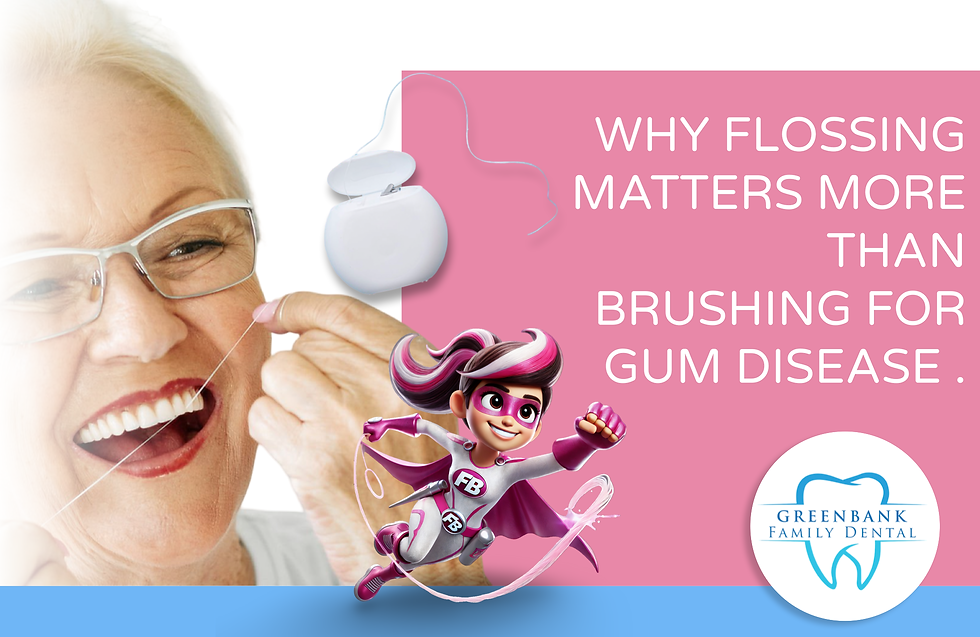
Most people believe that brushing twice a day is enough to keep their gums healthy. While brushing is essential, it doesn’t tell the whole story — especially when it comes to gum disease.
At Greenbank Family Dental, we often see patients who brush well but still experience bleeding gums, inflammation, or early periodontal disease. The missing link is usually flossing.
Here’s why flossing plays a more important role than brushing when it comes to protecting your gums.
Brushing Cleans Teeth — Flossing Protects Gums
Brushing is excellent for removing plaque from the front, back, and chewing surfaces of your teeth. However, it cannot reach between the teeth or just below the gumline — where gum disease often begins.
Flossing cleans the spaces where:
Plaque builds up unnoticed
Bacteria thrive without oxygen
Inflammation silently develops
These tight areas between teeth account for up to 40% of the tooth surface, meaning brushing alone leaves almost half the mouth vulnerable.

Gum Disease Starts Between the Teeth
Gum disease doesn’t usually start with pain. It begins quietly with:
Bleeding when brushing or flossing
Swollen or tender gums
Persistent bad breath
In most cases, the earliest signs appear between the teeth, not on the visible surfaces you brush.
When plaque isn’t removed from these areas, it hardens into tartar and triggers inflammation. Over time, this can lead to:
Gum recession
Bone loss
Loose teeth
Advanced periodontal disease
Flossing disrupts this process before it becomes serious.
Why Flossing Is More Effective Against Gum Inflammation
Gum disease is driven by bacteria living below the gumline, not just on the tooth surface.
Flossing:
Removes plaque where bacteria cause inflammation
Reduces bleeding and swelling
Helps gums reattach more firmly to teeth
Improves oxygen flow, making it harder for harmful bacteria to survive
Without flossing, bacteria continue to spread — even in patients who brush thoroughly every day.
🩺 Clinician Insight: Dr Jordan on Why Flossing Really Matters
Dr Jordan, Associate Dentist at Greenbank Family Dental, shares: “If I could give one piece of advice to the general public, it would be to floss your teeth. I ask every new patient about their flossing habits, and a very high percentage don’t floss. Usually there’s a laugh about it — we all know how it goes. To be honest, I wasn’t a big flosser myself until dental school. Seeing the difference between people who clean between their teeth and those who don’t — it’s night and day. And this isn’t just about the here and now. It’s about the future. When you’re in your 70s or 80s, you don’t want to be limited in what you can eat. You want to enjoy life — enjoy your food — and that means keeping your teeth for as long as possible. Our goal is always to save teeth, not take them out.”

Meet Miss Floss Boss — A Hero for Healthy Habits
One of the reasons flossing is so often overlooked is simple: most of us didn’t grow up doing it consistently.
At Greenbank Family Dental, this reality inspired the creation of Miss Floss Boss — a fun, recognisable character designed to champion flossing and good oral habits from an early age.
Miss Floss Boss was created to:
Make flossing feel normal, not optional
Help children build lifelong habits early
Give families a positive, relatable way to talk about oral health at home
By starting with kids, we’re helping prevent the same gum issues we see in adults decades later.
Learn more about how Greenbank Family Dental supports children’s oral health through fun, preventative education initiatives like Miss Floss Boss and Captain Clean Tooth.
🌱 Changing Oral Health From the Grass Roots
Improving oral health isn’t just about fixing problems — it’s about preventing them before they start.
That’s why Miss Floss Boss plays a key role in Greenbank Family Dental’s community outreach, alongside initiatives like Captain Clean Tooth. Together, these programs focus on:
Early education
Positive reinforcement
Making oral health engaging rather than intimidating
When children learn to floss early, it becomes second nature — not a chore they try to adopt later in life.

From Kids to Adults — One Consistent Message
Whether we’re talking to a child meeting Miss Floss Boss for the first time, or an adult learning about gum disease later in life, the message is the same:
Healthy gums protect your teeth for life.
By teaching flossing early and reinforcing it often, we’re helping our community enjoy healthier smiles — now and well into the future.
“But My Gums Bleed When I Floss…”
This is one of the most common reasons people stop flossing — and one of the biggest misconceptions.
Bleeding is a sign of inflammation, not damage.
If your gums bleed when you floss:
It usually means bacteria are already present
Gentle daily flossing allows the gums to heal
Bleeding typically improves within 7–14 days
Stopping flossing allows inflammation to worsen.
If bleeding persists, it may indicate early gum disease and should be assessed by a dental professional.
Flossing and Long-Term Gum Health
Regular flossing helps:
Prevent gum disease progression
Reduce the risk of tooth loss
Improve breath
Support overall oral and systemic health
Research increasingly links gum inflammation to conditions such as heart disease, diabetes, and cognitive decline — making daily flossing one of the simplest preventive health habits you can adopt.
What If Flossing Is Difficult?
Not everyone finds traditional string floss easy. The good news is there are effective alternatives, including:
Interdental brushes
Water flossers
Floss picks (used correctly)
Our team can help you choose the option that works best for your teeth, dexterity, and gum health.
When Flossing Isn’t Enough
If plaque and bacteria have already moved deeper below the gumline, flossing alone may not be sufficient.
In these cases, professional care such as:
Periodontal assessments
Deep cleaning
Ongoing gum maintenance
may be recommended to stabilise gum health and prevent further damage.
Protect Your Gums for Life
Brushing keeps your teeth clean.Flossing keeps your gums healthy.
If you’ve noticed bleeding gums, bad breath, or changes in gum appearance, early intervention can make a significant difference.
📍 Concerned about your gum health?
Book a comprehensive check-up with Greenbank Family Dental and let our team help you protect your smile — now and into the future.


Comments